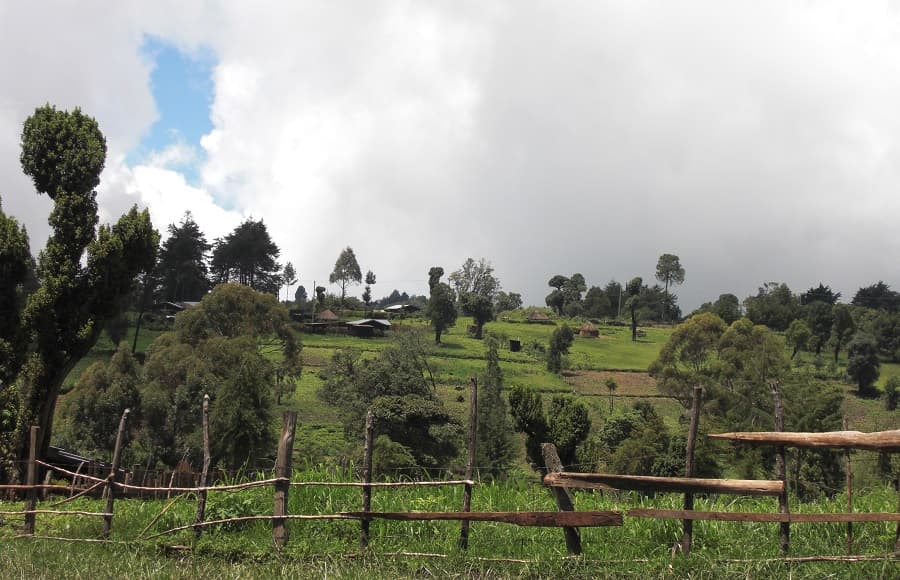
More than 80% of Kenyan households rely on biomass (e.g. wood & charcoal) for energy; it is mainly used for cooking and occasionally for space and water heating. Wood and charcoal are obtained almost exclusively from the forest (90%), which is a key driver of deforestation in Kenya. The impact of deforestation is widespread, affecting the livelihoods of local people – mainly the rural poor - where it disrupts important environmental functions, such as water and soil nutrient retention.
In Kenya, cooking is traditionally carried out indoors on thermally inefficient 3-stone fires, which results in incomplete combustion and the production of large amounts of smoke and indoor air pollution. Indoor air pollution has been linked to a range of health problems such as acute respiratory infections (ARI) in children, chronic obstructive lung diseases (such as chronic bronchitis and asthma), lung cancer and neonatal complications.
The Cookstoves are distributed at no cost to the stove owners, who live in rural areas with considerable levels of poverty and would otherwise be unable to afford them.Social and Sustainability Benefits
The project is contributing to sustainable development:- Reduction in emission of Greenhouse Gases
- Avoidance of deforestation – also preventing soil erosion & nutrient loss and risk of flooding
- Protection from lung diseases & lung cancer
- Protection from neonatal complications
- Reduced burns and injuries (from exposure to an open fire)
- Number of families reached: 19,674
- Number of people positively impacted: 96,402
Buy high-quality, high-integrity carbon credits
Browse independently verified projects with CRISP ratings on the Carbon Marketplace (carbonfootprint.store), buy online in minutes and receive proof of retirement for every credit.
Browse the Carbon MarketplaceAlready calculated your carbon footprint?
Enter your tonnes of CO2 and get prices for verified carbon credit projects of any size on the Carbon Marketplace.