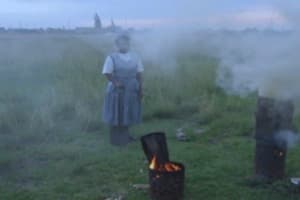

The Highveld Air Quality (HAQ) – Sakhile project is located entirely in Sakhile, a township adjacent to the town of Standerton, in the Mpumalanga province of South Africa.
The project activity is the introduction of an alternative ignition technique for domestic coal fires that causes households to switch from a less efficient ignition technique with significant greenhouse gas emissions to a technique that results in considerably less emissions. This introduction is done by demonstrating the technique to members of coal using households through well-orchestrated demonstrations in streets, houses and public places.
The effect of the project activity is that coal users start to use an alternative top-down ignition technique that leads to a 50% reduction in coal consumption and GHG emissions. It also leads to a drastic reduction in indoor and ambient air pollution, better visibility and reduced health risk.
Social Benefits
Social benefits to communities are primarily gained from the improved health of the community members. A recent study found that air pollution in the metropolitan areas of South Africa caused 67.2 restricted activity days per potentially economically active person. The major cause of this health impact is domestic solid fuel use. As the alternative ignition technique reduces particulate pollution from a single fire by an average of 87%, the effect on levels of indoor pollution and ambient air pollution is dramatic. Smoke from coal fires that are ignited using the bottom-up ignition technique also has a marked effect on visibility, especially in the late afternoon and early morning when many people make fire at the same time. Because more people use coal in winter, this is worse in winter. This leads to increased risk of road accidents and crime during these times.
Economic Benefits
The economic benefit to the end-users takes the form of savings on health care and coal consumption. A household, which converts to the alternative technique, saves on average 422kg of coal per year. This leads to a financial cost saving in the household.
The project also provides employment and training to area leaders, team leaders, demonstrators and survey field workers in every location where the project activity takes place. In 2010, 16 local people where employed by the project.
Improved Health Reduced household costs
Buy high-quality, high-integrity carbon credits
Browse independently verified projects with CRISP ratings on the Carbon Marketplace (carbonfootprint.store), buy online in minutes and receive proof of retirement for every credit.
Browse the Carbon Marketplace