Carbon Credits · Projects
ENERGY EFFICIENT COOK STOVE IMPLEMENTATION IN INDIA
Efficient household cookstoves - Carbon Offset

Efficient household cookstoves - Carbon Offset
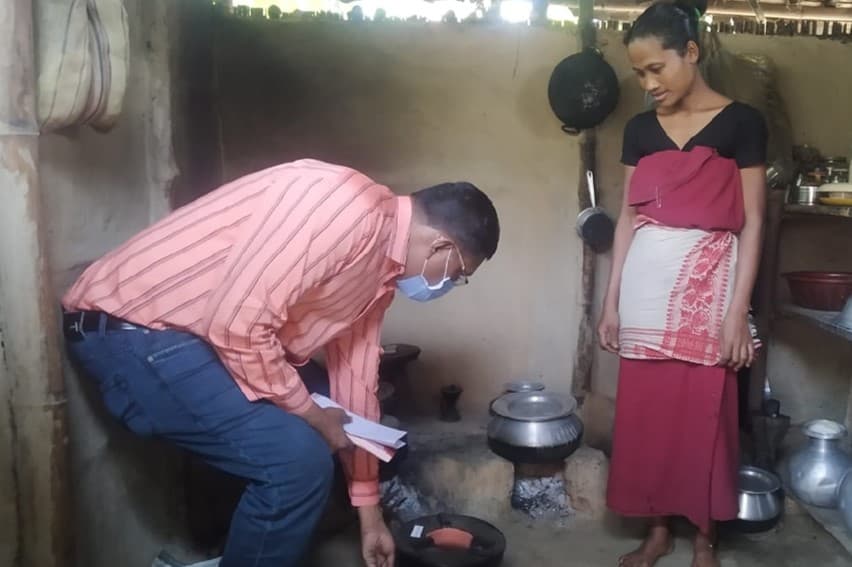
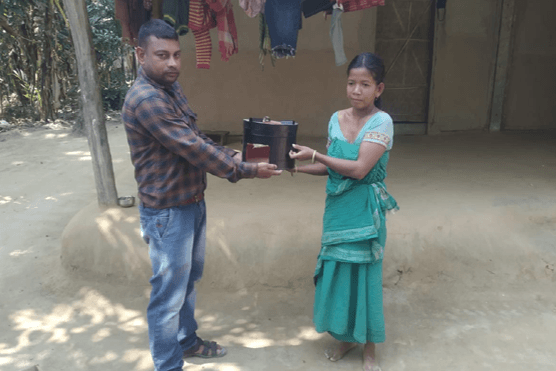

The project involves providing improved cooking stoves (ICS) to socially deprived communities in India. The project provides households with clean cooking solutions; by replacing the less efficient traditional stoves from the kitchen with more efficient stoves.
Replacement of the traditional less efficient cooking stoves with the new more efficient ones will reduce the exposure of the family members, specifically women, to the indoor air pollution and therefore result in saving of health related expenses.
The project is expected to save over 350,000 tCO2e during the 10 year crediting period (2019 to 2029). Each cookstove will reduce emissions by approximately 1.46 tonnes of CO2e per year. To achieve the initial targeted volume of emission reductions, the project aims to disseminate over 25,000 cookstoves to homes in India. The project started distribution in April 2019.
The project is implemented in the state of Assam in the North East of India within three districts Baksa, Udalguri and Barpeta. More than 62% of the rural households in these districts use firewood for cooking purpose. Similarly, another 29% use dung cake to meet their daily cooking energy requirements. The majority of communities are rural and some lack direct road access. This drives the high reliance on fuelwood as the primary source of cooking fuel. The project aims to reach disadvantaged people with the clean cooking solutions. The project trains people at the local level to cater the households with stove construction including female stove makers.
The main design improvement for these stoves is the use of a prefabricated metallic or ceramic combustion chamber. This combustion chamber ensures consistent quality and durability of the ICS and will improve the lifespan of the stove with consistent performance in terms of efficiency; reduction of indoor air pollution and emissions; and safety. The metal or ceramic combustion chamber is surrounded by an isolative material, then the outer body is constructed in a cube shape, the stove incorporates an L-shaped combustion chamber and pot “skirt” to improve heat transfer and combustion efficiency during cooking activities. The combustion chamber consists of a horizontal fuel magazine and vertical internal chimney. Wood is fed horizontally into the fuel magazine ensuring even combustion from one end and a more easily regulated feed rate. The internal chimney creates draft, accelerating combustions gases from the fire. These gases are then forced through the skirt that surrounds the cook pot. Greater convective heat transfer is the result of improved advection and increased surface area contact. With the high power combustion, emission of indoor air pollutants is minimized rendering a smoke-free kitchen. A stove has a lifetime of around 7 years which requires the stoves to be replaced after 7 years of installation.


Browse independently verified projects with CRISP ratings on the Carbon Marketplace (carbonfootprint.store), buy online in minutes and receive proof of retirement for every credit.
Browse the Carbon MarketplaceEnter your tonnes of CO2 and get prices for verified carbon credit projects of any size on the Carbon Marketplace.
Support high-integrity projects like this one through the Carbon Marketplace, or ask our team to build a portfolio for you.